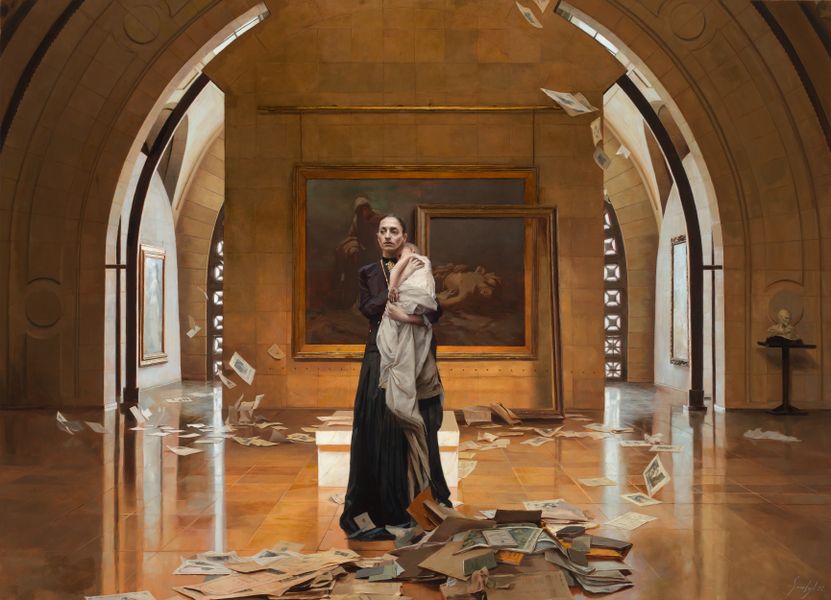
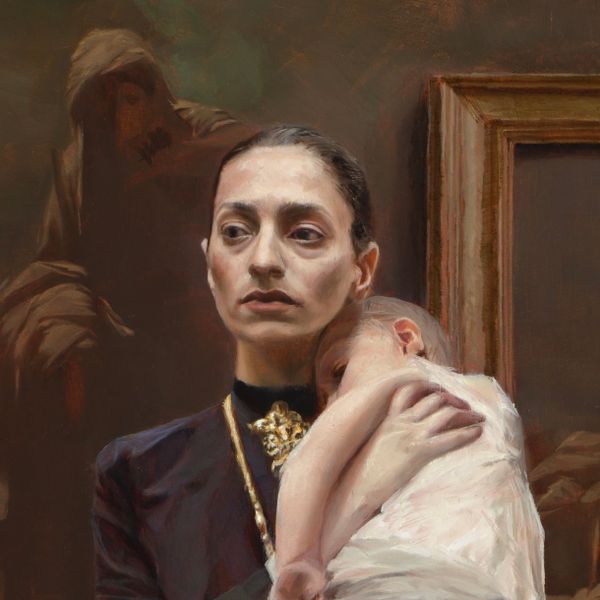
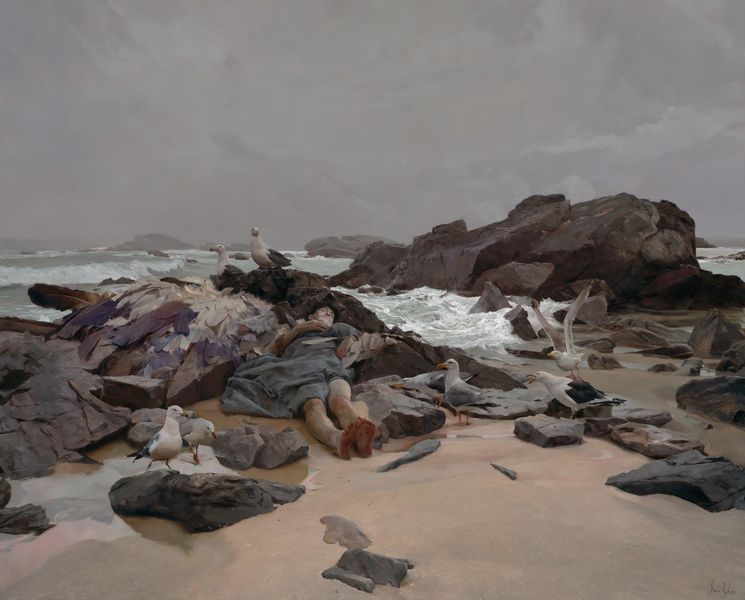
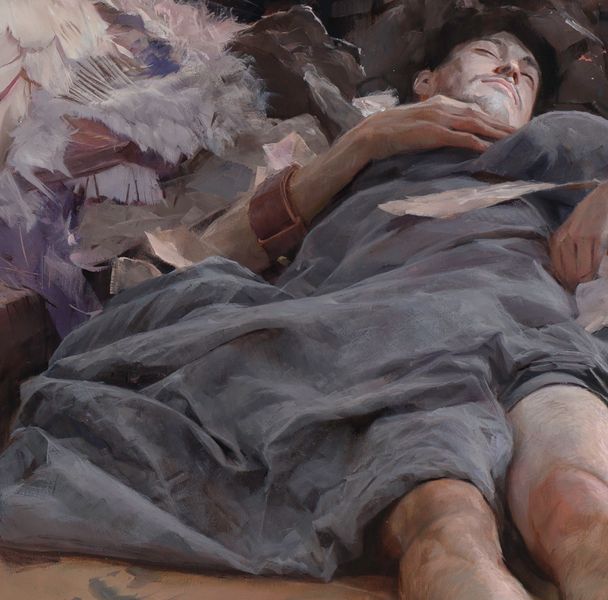
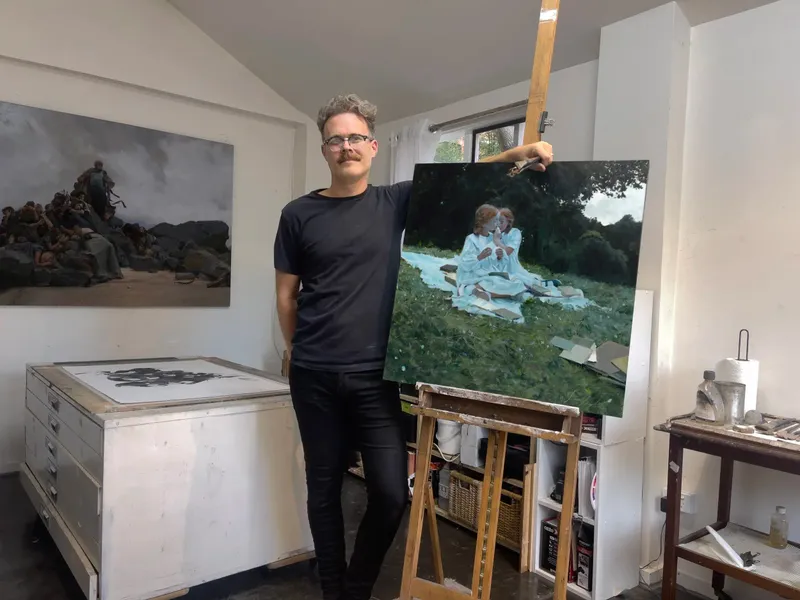
Sean Layh is a figurative painter whose large-scale, multi-figure compositions explore dramatic narratives drawn from classical Western literature and theatre. We are delighted to collaborate with Sean during our season of Julius Caesar. Sean joins the rehearsal room this week to develop his next piece, inspired by Peter Evan's production. We sat down with Sean to hear about what inspires his art and hear about his process thus far.
What has inspired your previous work?
Nearly all of my previous work is based off classical Western literature or theatre. From teenage years onward, it was the type of literature that I enjoyed and read and it’s since been forever stored in my head as reference material. It wasn’t intended this way, but it became what i kept coming back to when I was painting.
What draws you to Shakespeare?
My love of Shakespeare predates this collaboration with Bell Shakespeare. I would consider myself a latecomer to Shakespeare actually; in all the literature I indulged in in my teens and twenties; Shakespeare wasn’t a part of it.
I remember being told very sternly that you “have to get into Shakespeare” from an actor friend of mine. He grabbed my shoulder and said “we few, we happy few, we band of brothers”. Clearly impassioned, I thought he was a little ridiculous but it was a splinter in the mind and I began to explore Shakespeare. I fell deeply in love.
The last thing you want to do as a visual artist is be told what to do. You want the images to come up inside you and that’s what Shakespeare does. The limitations of the Elizabethan stage required Shakespeare to describe the emotions, the psychology, the scene. It’s so rich in description that the images just come thick and fast.
Can you describe the project you’ll be undergoing with Bell Shakespeare?
I would normally read or watch Shakespeare to conjure these images but for this, I’m doing it directly in response to Peter’s interpretation of Julius Caesar. It’s similar to what I normally do but the context is far more special because it’s not just me alone doing it, I’m responding to the whole ensemble production. The fun of it is what comes out of that. And by the end of this project there will presumably, be a painting; a multifigure, epic narrative piece derived from Peter’s production.
How is this process different to taking inspiration directly from the text?
Peter has to translate the source material to the stage, and there are intuitive rules about how that can work and how it might not work. These are not the same rules that apply to painting. If I did a strict visual recreation of the stage show, it wouldn’t work. It would be a painting of a stage show and that’s just documentary. If this is what you want, why not take a photo? It serves that purpose and does it better.
Even though I’m looking visually on how it’s being put onto a stage; I’m thinking about what perspective Peter is presenting me, the viewer, and how do I translate that into painting. For example, there is a whole colour theme that’s running through the play, and that’s something I’ve latched onto. It doesn’t necessarily mean the sets and costumes will be represented but one of the clearest ways to carry across the tone of the production is to be true to the colour design.
What is currently inspiring you about Julius Caesar thus far?
From the first hours in the room, I have ideas. What my process tends to be is to link those ideas to the database of paintings in my mind. I typically try to link my idea with an example from one my favourite paintings from the 19th century, then study that painting and see how they solved the problems; how do they assemble crowds, is it about light, is it about colour, is at about the inbetween?
I’m watching Peter and the cast and then I’m jumping to these historical paintings. Comparing and contrasting to get a sense of how I could construct a painting. It's really about choosing what piece of drama to paint.
The challenge is finding the one dramatic point to represent. And in a play like Julius Caesar, it’s dramatic point after dramatic point after dramatic point after dramatic point. That’s the challenge for me: what point is the point to depict?
How do you decide what you’re going to create?
The challenge and the opportunity will be in trying to get the connectedness of the actors to translate into the painting. They are bringing the drama and the objective of the painting is to capture the drama.
The last painting I did was with an actor who played Hamlet. Because its a standalone painting, it becomes a portrait of the actor playing hamlet. It is of the actor but to me, they are Hamlet. This was importantly not someone who has just posed, but someone who has lived and performed the role of Hamlet.
This painting for Julius Caesar could be multiple characters or perhaps it could be Brutus or Calpurnia or Caesar. The power of it might actually be in the ensemble, performing with each other and trying to capture that. It’s still a mystery.
Why are you excited about this collaboration with Bell Shakespeare?
These types of collaborations used to be very common. The heavy hitter painters of the 19th century would be in the theatre – some would even design for the theatre – and they would paint these tremendous portraits of these actors in their roles in Shakespeare plays.
It’s odd to me that there isn’t more cross pollination because theatre is defined by its collaboration between director and designer and actor and technician. The magic is created from the coming together of perspectives and I think visual arts brings something to the table.
When art forms can respond to one another, I think it can be magical.