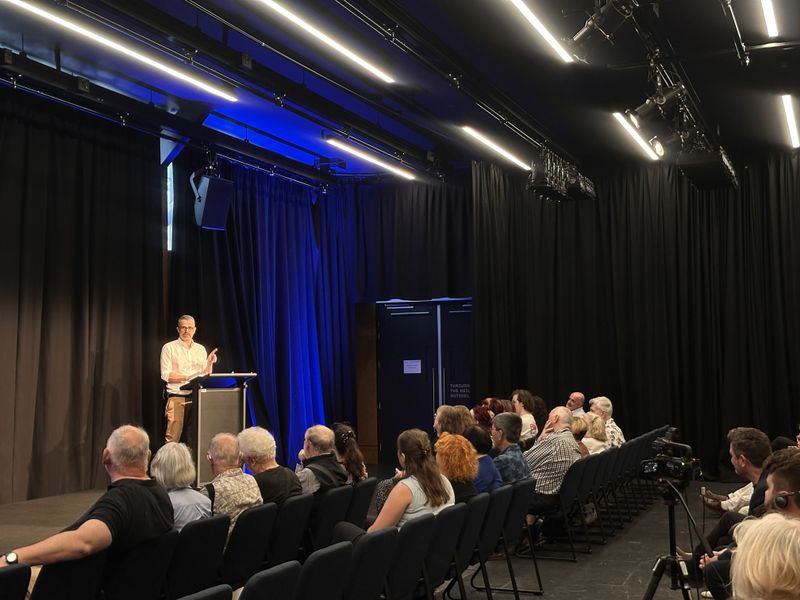
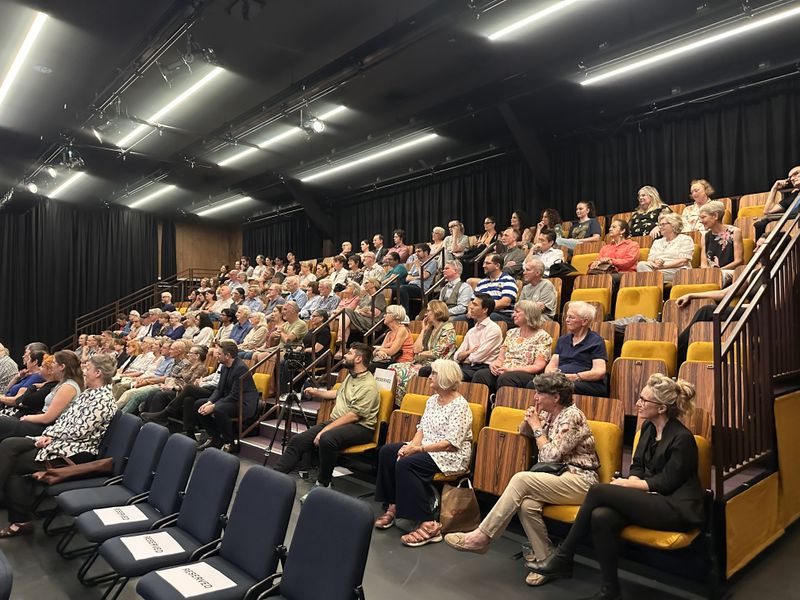
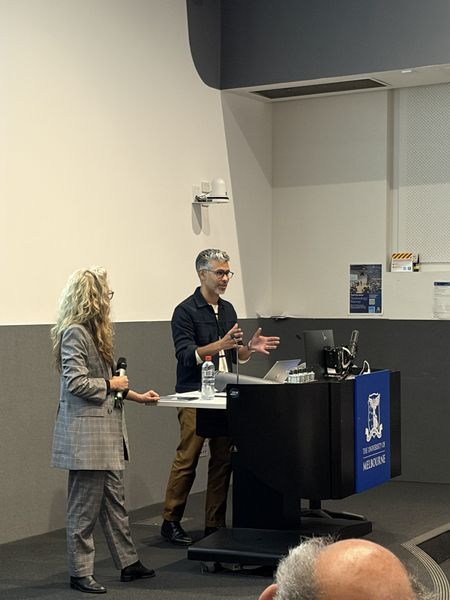
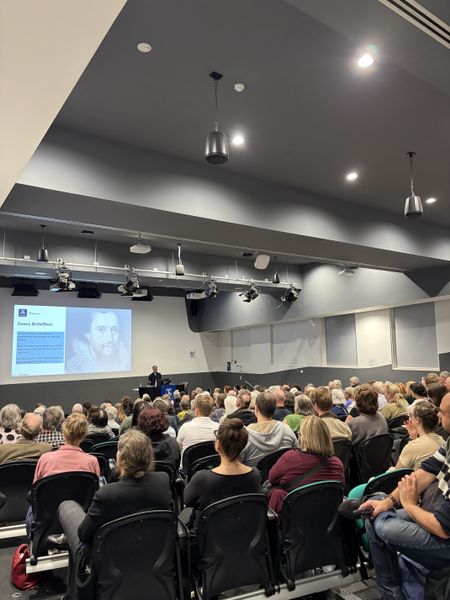
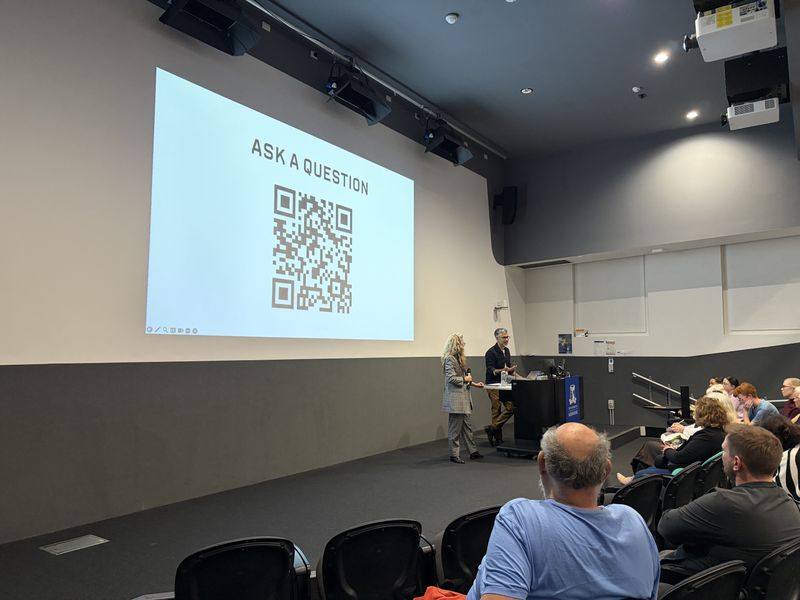
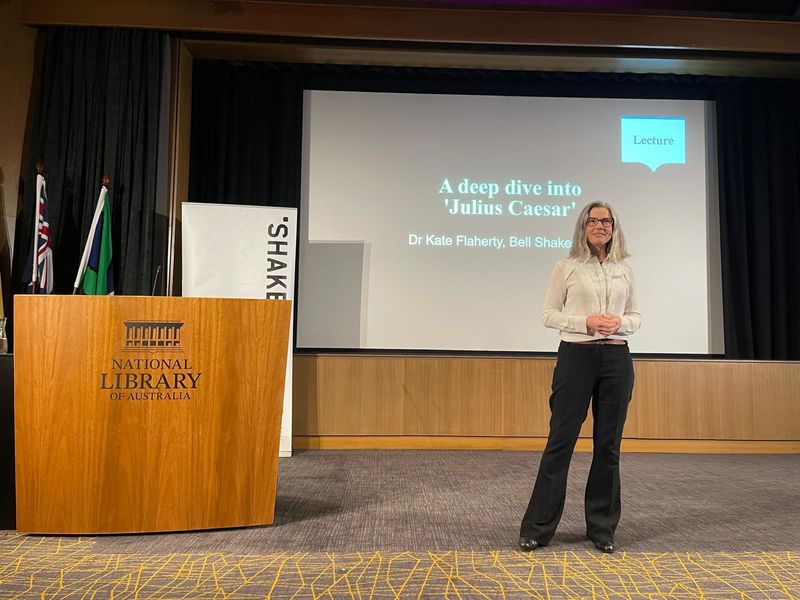
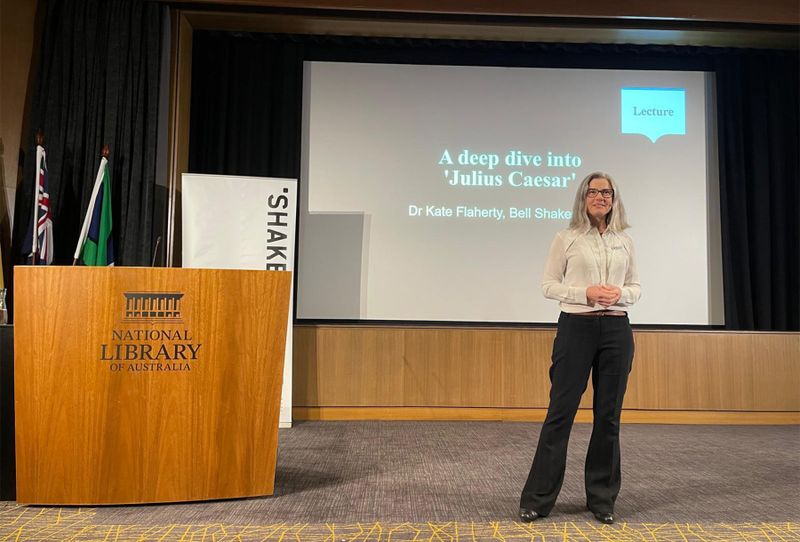
In anticipation of the Bell Shakespeare performance tour, A Deep Dive into Julius Caesar was hosted in Sydney, led by Professor Huw Griffiths, Melbourne, led by Professor David McInnis (Professor of Shakespeare and Early Modern Drama) and Canberra led by Dr Kate Flaherty (Head of the English program at the Australian National University).
Each engaging session, facilitated by some of Australia's brightest minds, unpacked ideas, language and historical context behind Julius Caesar, offering fresh insight into one of Shakespeare's most enduring political dramas.
To begin, Dr Kate Flaherty introduced Shakespeare’s Julius Caesar (1599) as one of his most enduring political plays, shaping how we remember one of history’s most famous deaths. The lecture briefly traced a map of events in Rome, unpacking debates around power and its abuse, and the ethical tension between personal loyalty and political responsibility.
Drawing on Plutarch’s Parallel Lives, studied by Shakespeare through Latin sources, the talk explored how history already arrived on the page charged with conflict. Shakespeare distilled these vivid, often contradictory accounts into a drama where characters are deeply aware of their own public performance, presenting history through the lens of theatre itself.
Central to the play is anxiety not about who Caesar is, but what he might become. Brutus’s justification: “Think him as a serpent’s egg… and kill him in the shell”, frames the assassination as a fearful act of prevention. Shakespeare’s adaptation of iconic moments, including “Et tu, Brute?”, heightens both the political and emotional stakes.
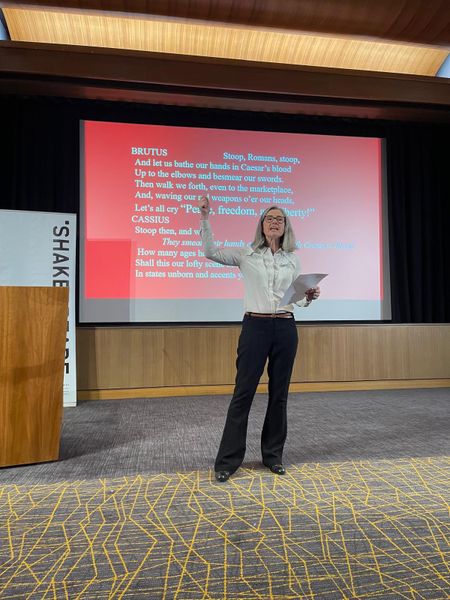
Through live audience participation, the lecture unpacked Brutus and Mark Antony’s funeral speeches, revealing how rhetoric, iambic pentameter, and rhythm shape meaning, inform acting choices, and crowd response. Kate further noted that Antony’s claim that Caesar died of a “broken heart” reframes the murder as an act of betrayal rather than violence alone.
Julius Caesar offers flawed heroes and sympathetic villains: Brutus emerges as a figure of integrity, Cassius as his pragmatic foil. Written for Queen Elizabeth I and her people, the play continues to resonate by asking timeless questions about leadership, persuasion, and the cost of political action.
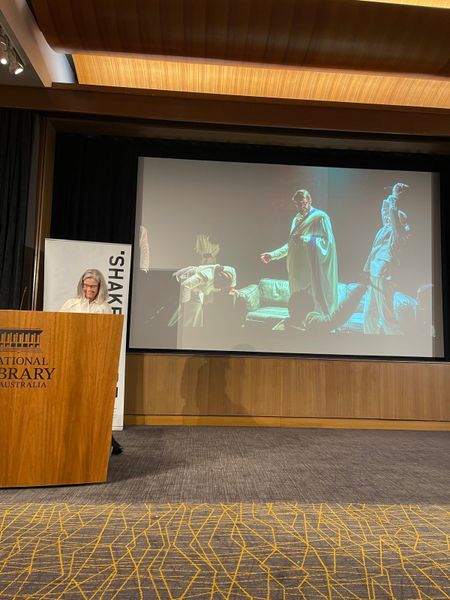
Dr Flaherty then presented a snapshot of notable productions of Julius Caesar across history, highlighting the shifting political and cultural contexts that have shaped its interpretation. And to close the lecture, the audience was left with a question to ponder: would Caesar’s death hold such dominance in the human psyche without Shakespeare’s play? Dr Flaherty state that while the question may be unanswerable, it is undeniable that we are marked by Shakespeare. Perhaps his most important legacy is not that he reports history, but that he makes it intimate and inhabitable in the present, keeping urgent questions about politics, morality, and mortality alive.
Thank you again to Dr Kate Flaherty, Professor Huw Griffiths and Professor David McInnis for their time and incredible insight into Julius Caesar.