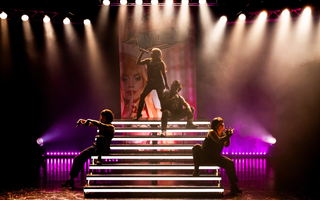
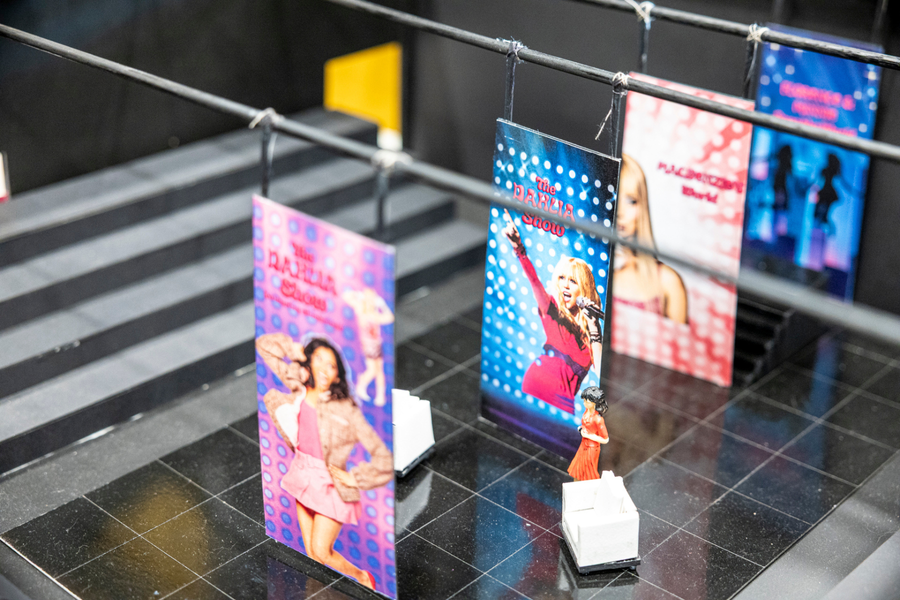
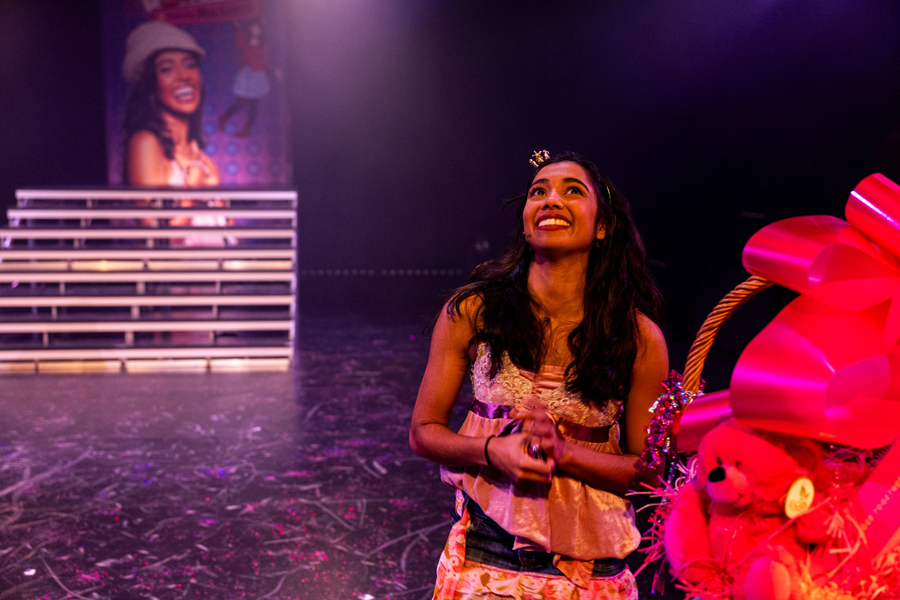
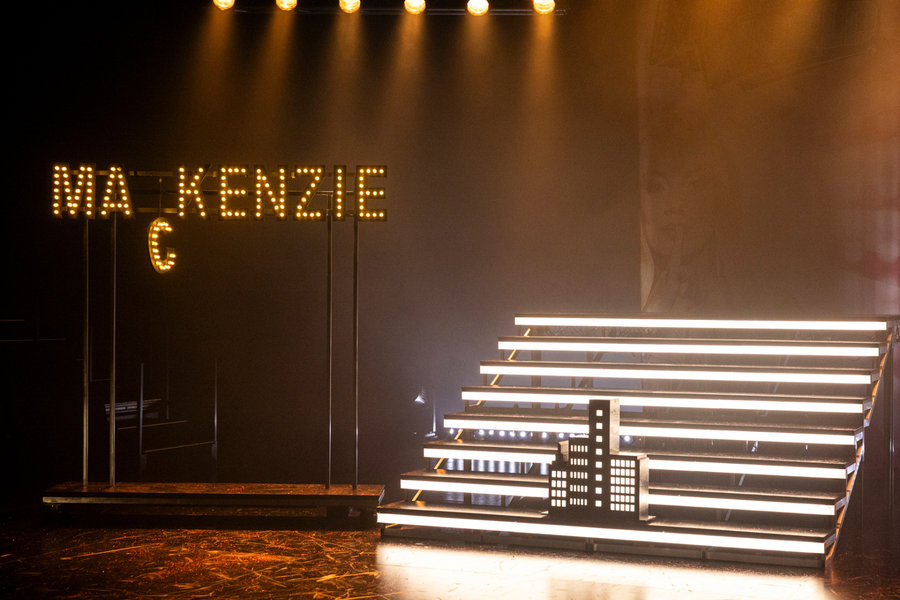
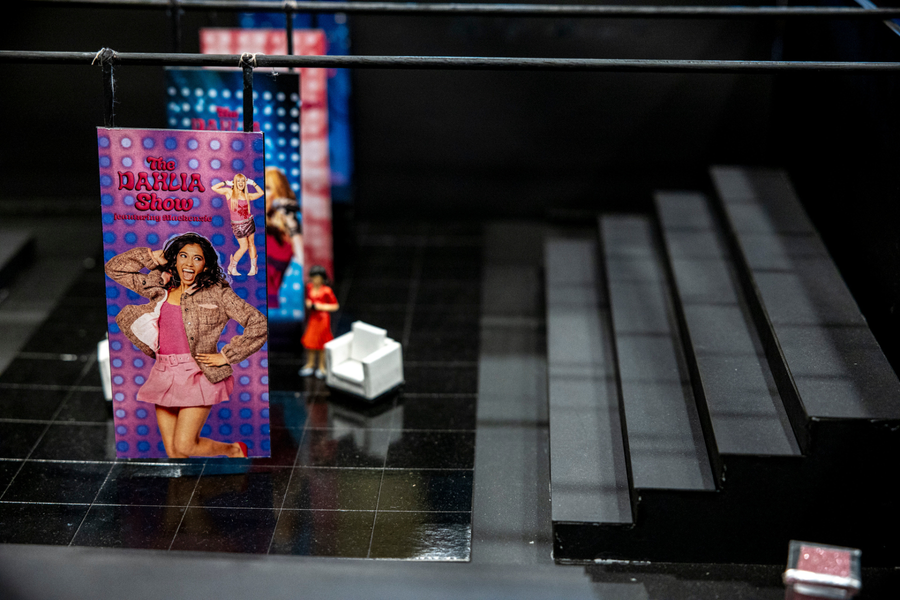
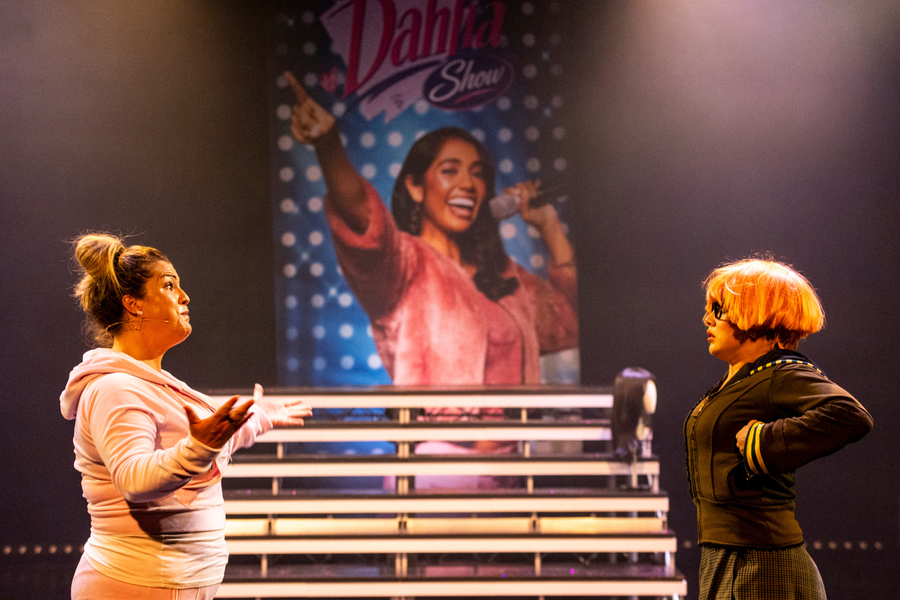
Designer Keerthi Subramanyam and Director Virginia Gay built the set design and audience experience around the two co-existing worlds of backstage and onstage.
We start in the backstage world. As the audience is so central to Mackenzie's world, director Virginia Gay has aligned the design of the audience experience of Yve Blake's play. In this way, audiences arriving to see the production are treated as if they are a studio audience for the actual Mackenzie show. A pink carpet leads audiences into the theatre and Front of House staff wear Mackenzie crew shirts. The walk into the theatre is styled to resemble the show's backstage area and studio backlot, and cast interact with audience members pre-show, instructing them as if they are the real studio audience.
Once the production commences, the cast also become crew, moving set pieces as if the backstage and onscreen worlds are in constant flux. Roadcases, lights, furniture and costume changes rapidly take place in front of our eyes, and we see the juxtaposition between onscreen and off-screen worlds intersect.
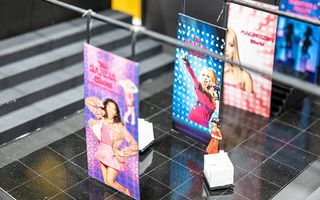
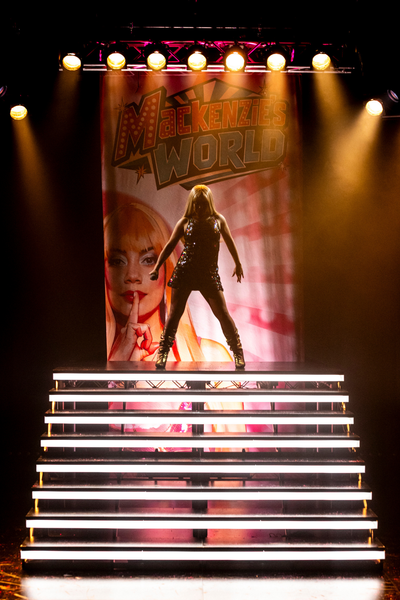
A set of stairs become a platform for performance, hanging behind which is a series of brightly coloured banners which drop to showcase the stars of each hit television show, cycling through to show a metaphorical usurping from The Dahlia Show to Mackenzie's World to Florence and Minnie's eventual rise to power. The banners deliberately reference propaganda posters, indicating a new reign.
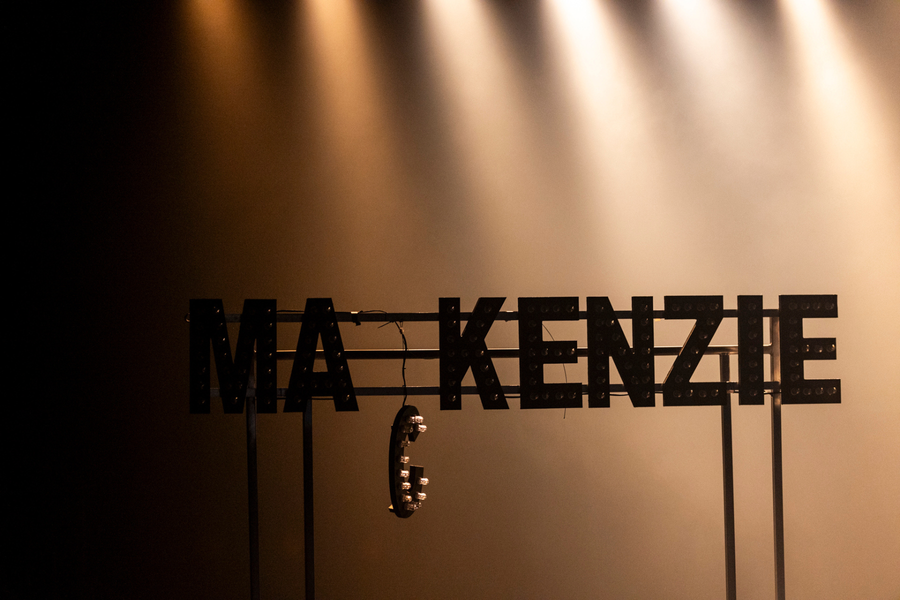
Set pieces are minimal yet evocative, to indicate a quickfire series of locations. Road cases, lighted vanity mirrors, spotlights, talk show couches, microphone stands, script read tables and other set pieces are rolled in and out of the space for quick transitions. Pink carpets take us straight to an awards show and crowd control barriers separate fans from celebrity. Flooring is a reflective black with flecks of pink. A cutout city skyline and lightbulbs spelling out 'Mackenzie' are the set piece for the provocative song City Girl.