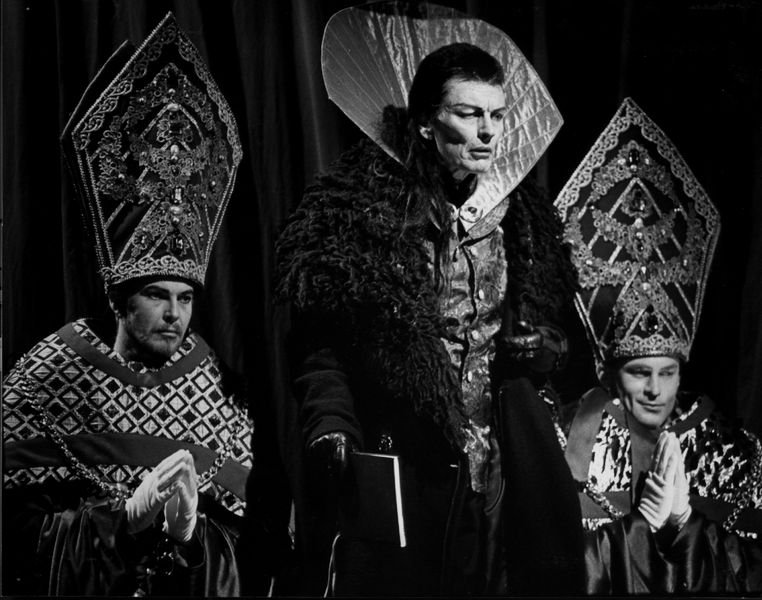
 Founder John Bell, explains how he came to love Shakespeare and the beginnings of creating the Bell Shakespeare company
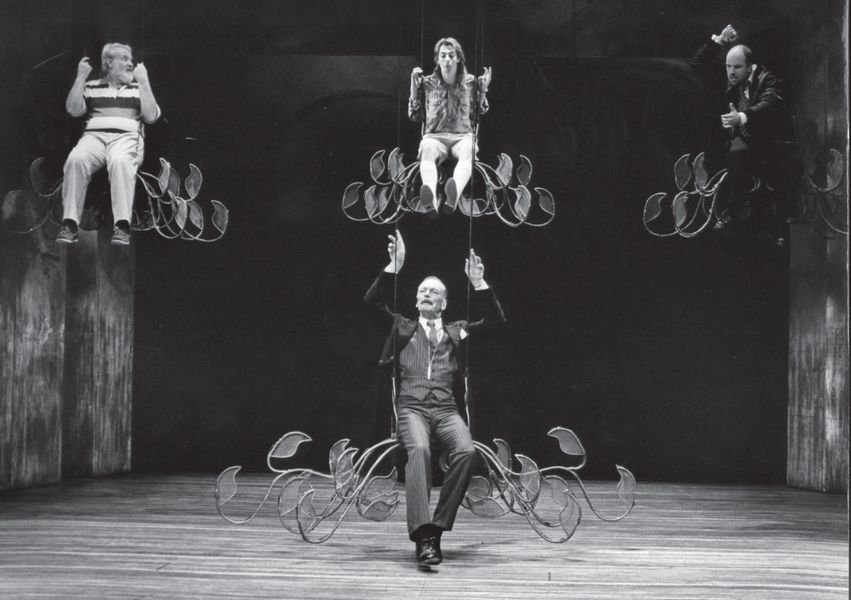 Archival image of John Bell performing in Bell Shakespeare’s 1995 production of Twelfth Night
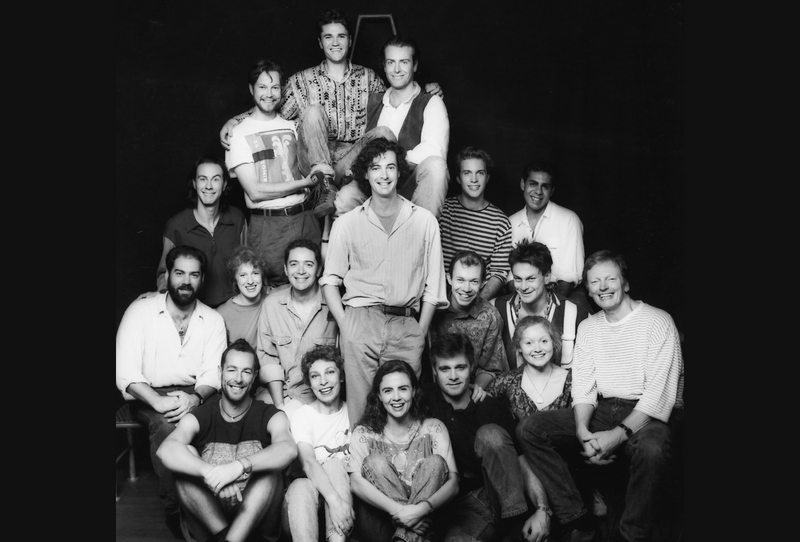
John Bell & the company’s DNA
Bell Shakespeare was founded in 1990 by prolific actor and director John Bell AO OBE, who had a special relationship with Shakespeare and a strong desire to make this work accessible, true to the writer’s mission of creating work for the masses, and relevant to Australians now. And so in 1990, when John was approached by his long-time friend and philanthropist, Tony Gilbert, the decision to start the company was a no-brainer.
Understanding John is the key to understanding Bell Shakespeare. In listening to his account, we can see glimpses of what became the DNA of Bell Shakespeare; the things that defined John’s mission and that still shape the company today.
Founder John Bell, explains how he came to love Shakespeare and the beginnings of creating the Bell Shakespeare company
Archival image of John Bell performing in Bell Shakespeare’s 1995 production of Twelfth Night
John himself credits two of his teachers, Brother Elgar and Brother Jeffery, for his love of Shakespeare and performing. Not only did they introduce John to Shakespeare’s work, they also made it come alive for him. They encouraged him to explore the craft of acting for the first time. It is important to note that all of this happened in the regional NSW town of Maitland. As such, the importance of an arts education, particularly for those who live outside of major cities, became a central priority for Bell Shakespeare in its infancy.
Actors at Work (now known as The Players) was one of the first initiatives created by the company. In this program, young actors go directly into schools and perform Shakespeare’s works adapted for school children at a variety of ages. It has evolved over the years, becoming more interactive, inviting students and teachers to join the actors on stage and travelling to more remote locations like Broken Hill in far west NSW. This approach brings Shakespeare’s work to life, giving students the opportunity to experience the plays as the author intended: performed live and adapted for the masses.
School students aren’t the only people who benefit from the program. Young actors have the chance to hone their craft in a uniquely immersive and challenging environment.
John’s vision for this program extended beyond the walls of Sydney. As a regional boy, access to this work was a priority for him.
The impact of The Players is felt all over the country, including in rural towns like Warialda. Located in north-west NSW, about an hour from Moree, Warialda has one public high school with fewer than 200 students, and limited access to live theatre. In 2022, Bell Shakespeare was supported by The Scully Fund to conduct a tour in the area. As a part of this tour, Warialda High School was visited by The Players and had one of the actors complete a two-week Artist in Residence program. This gave students access to live performance, lessons on drama and acting, and the works of Shakespeare, which they would not have otherwise experienced
Joanna, Head of Education at Bell Shakespeare, has a deep understanding of why education is central to the DNA of the company and how profoundly it impacts the lives of young people.
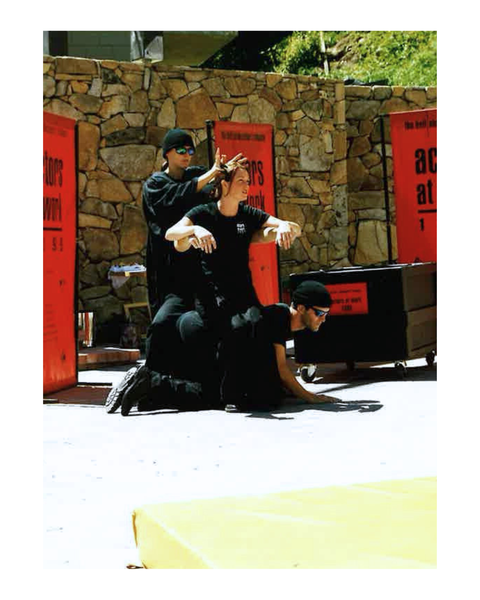
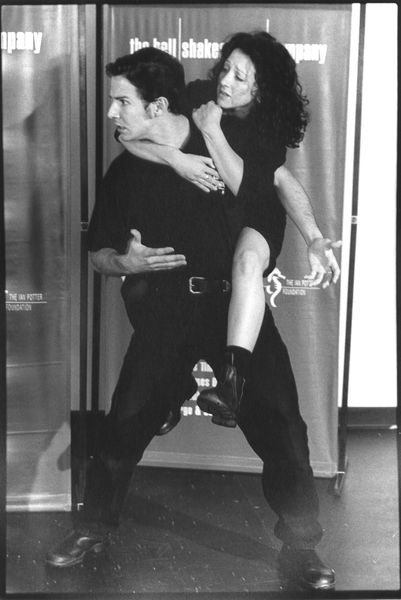 Archival image of the Actors at Work program (now known as The Players) in 1998
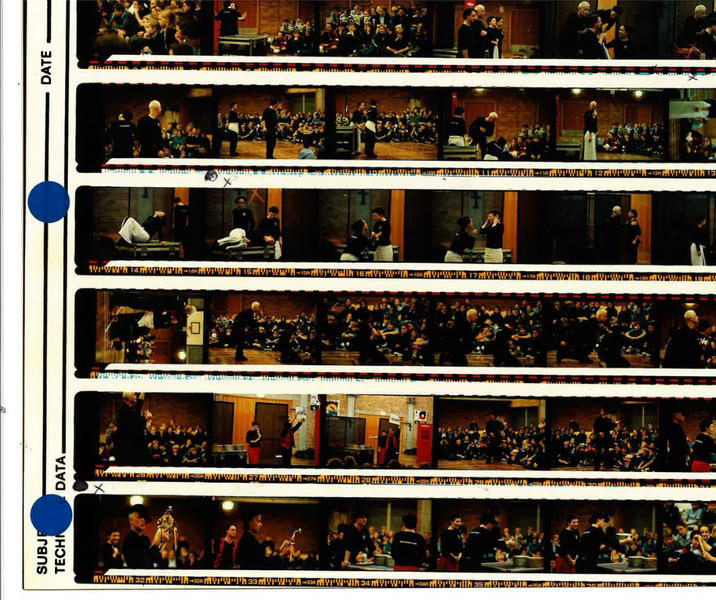 Archival contact sheet of the Actors at Work program (now known as The Players) in 2000
Classical theatre performances in Australia up to the 1970s reflected our English colonial heritage. Until then, Shakespeare was expected to be performed with traditional English accents and in Elizabethan dress. However, John Bell recognised the power of making this work relevant to Australian audiences.
The first step in achieving this was allowing audiences to hear the text in a voice they can relate to. In 1975, John produced Much Ado About Nothing for the first theatre company he co-founded, Nimrod Theatre Company. In this production, he caused quite a stir by instructing his actors to speak Shakespeare’s words in broad Australian accents.
As John Bell's biographer, Adrian Kiernander described it:
“Bell decided that he wanted his actors to break away definitively from the stale imported traditions of what passed for real British theatre in Australia. In particular, he wanted his actors to discover their own physicality in performance. In an attempt to loosen up his actors, he pointed to the stereotype of the volatile Latin immigrants, and suggested that for a part of the rehearsal period, they should perform the play with the broadest and most caricatured of mock Italian accents and gestures. So the actors began shouting, laughing, crying, waving their hands in the air, and discovering the physicality and emotional exuberance that Bell was seeking. But when this had permeated the performances, and Bell then tried to get them to pull back and perform with the physicality, but without the accents, they couldn't do it. So the company took what seemed like a daring risk: to perform the words of the Bard of Avon in the accents of Leichhardt fruiterers. The rest is history. The production took Sydney by storm.”
John Bell, Shakespeare and the Quest for a New Australian Theatre, Adrian Kiernander, 2014.
John began by altering the way his actors sounded, but has since continued to explore how Shakespeare is relevant in contemporary Australia. The question of why we should still be performing 400-year-old plays by a white British man in modern Australia is an important one to ask. For John and Peter Evans (his successor as Artistic Director of Bell Shakespeare), Shakespeare is relevant because of the way his work speaks to the human condition. When it is performed by a variety of familiar Australian voices, we can connect with its universal themes. While our country continues to work to make sure all Australian voices are included, Bell Shakespeare is actively ensuring true, diverse representation.
Shakespeare himself said, “What a piece of work is a man! How noble in reason! How infinite in faculty! In form, in moving, how express and admirable! In action, how like an angel! In apprehension, how like a god! The beauty of the world! The paragon of animals!” (Hamlet, Act 2, Scene 2) Here, Hamlet is reflecting both admiringly and despairingly on the universal human condition. Bell Shakespeare continues to perform these works, and audiences continue to see them because Shakespeare transcends time and culture in his portrayal of humanity.
Bell Shakespeare is also uniquely placed in the Australian arts sector as a leader in philanthropy, having been established by the generosity of a particularly supportive friend of John Bell, Tony Gilbert. From the beginning, Bell Shakespeare has relied on donated funds, which have grown over the years into an extremely supportive base of donors.
John Bell himself credits his friend Tony Gilbert as the reason that this company exists today. Tony met John in the 1960s, after seeing him perform in John Ford’s ’Tis Pity She’s a Whore at the University of Sydney and subsequently writing him a ‘fan letter’. The two then met for coffee and stayed close over the years, bonding over their shared love of Shakespeare’s work.
When Tony came to John with the question of how he could best invest his money into promoting the work of Shakespeare, John proposed that he use it to help create a dedicated Australian Shakespeare company. Tony, in a great demonstration of faith in John, asked him to be the leader. And so, Tony provided the initial capital needed to start Bell Shakespeare.
Tony’s act of generosity is a true reflection of the definition of ‘philanthropy’. This word is derived from the Greek term for ‘loving people’, and in a contemporary context usually refers to acts of financial generosity that better humanity. For Tony, giving to John Bell gave him a chance to make a positive contribution to the world, particularly toward the end of his life.
We can see that John Bell founded Bell Shakespeare on strong pillars, with a clear vision of making Shakespeare accessible to everyone, everywhere, with philanthropic generosity at the core of the company. But without effective leadership, the company would not have been able to achieve such an ambitious vision.
Many describe John Bell as an extremely competent leader with a unique ability to combine artistic talent with business sense. This meant that he was able to lean on the expertise of those around him and ultimately steer Bell Shakespeare through many of the shocks faced as a young company.
The contribution of John Bell’s wife, Anna Volska, also cannot be ignored. The pair met in 1962 when they were both a part of the Old Tote Company. At the time John was 22, and Anna was 18 years old. Now, 60 years later, they are still in partnership.
John credits Anna with being an absolutely essential part of the beginnings of Bell Shakespeare. Not only did she support him by standing by him through this tremendous risk, but she also acted in many seasons and made costumes in the early days.
It is clear that without the generosity of Tony Gilbert, John’s vision and leadership, and the support of his wife, Bell Shakespeare would not exist today. And, even more remarkably, the company has remained true to the vision set by John 35 years ago. The team is still working to make Shakespeare relevant to contemporary Australians and accessible to people all over the country.
Previous sectionPrevious section Continue readingContinue reading
A thousand natural shocks was written by Beatrice Waller, a Master of Museum and Heritage Studies student, who explored the history of Bell Shakespeare through oral histories in 2025 as a part of her degree. Oral history refers to the process of recording history in the voice of those who witnessed it and consists of conversational interviews recorded in audio format. Most of the interviews included in this publication were recorded by Beatrice, excluding Tim Cox, who was interviewed by Master of Museum and Heritage Studies student Andy Muir in 2021.
This project was completed in collaboration with the University of Sydney, a partner of Bell Shakespeare.