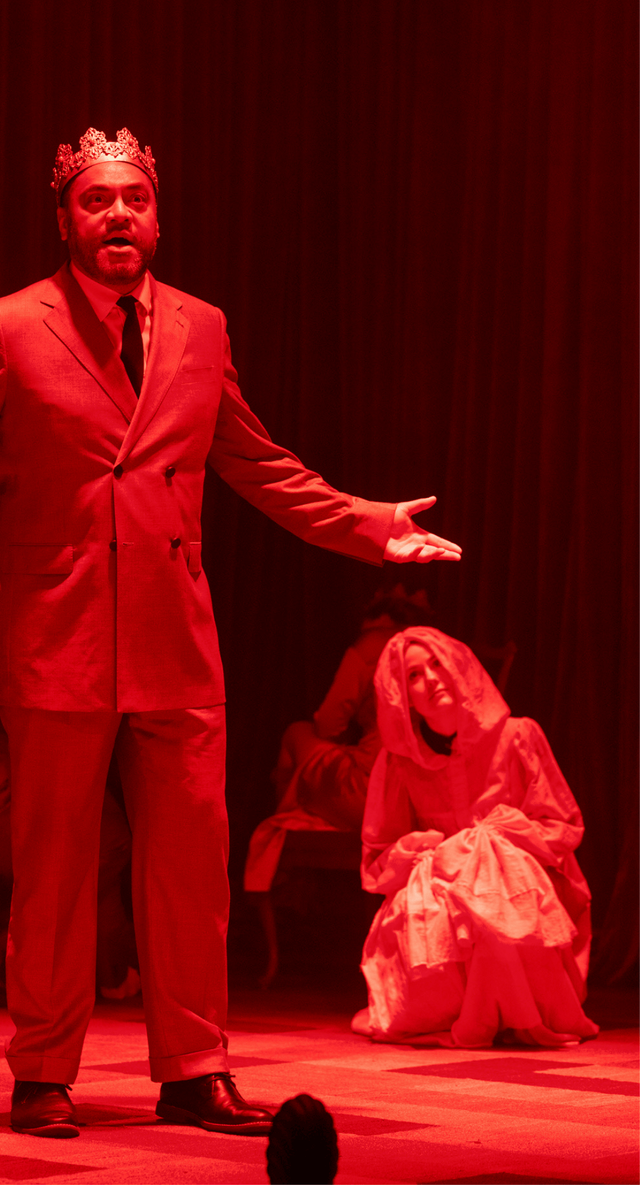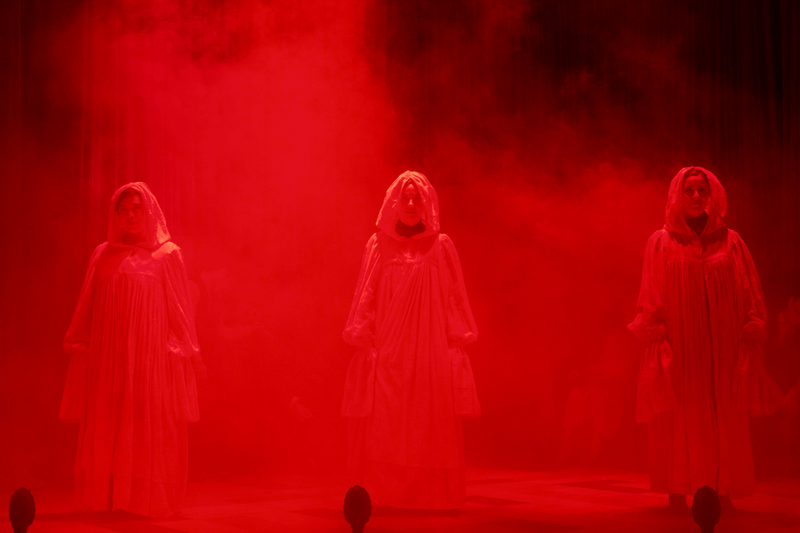
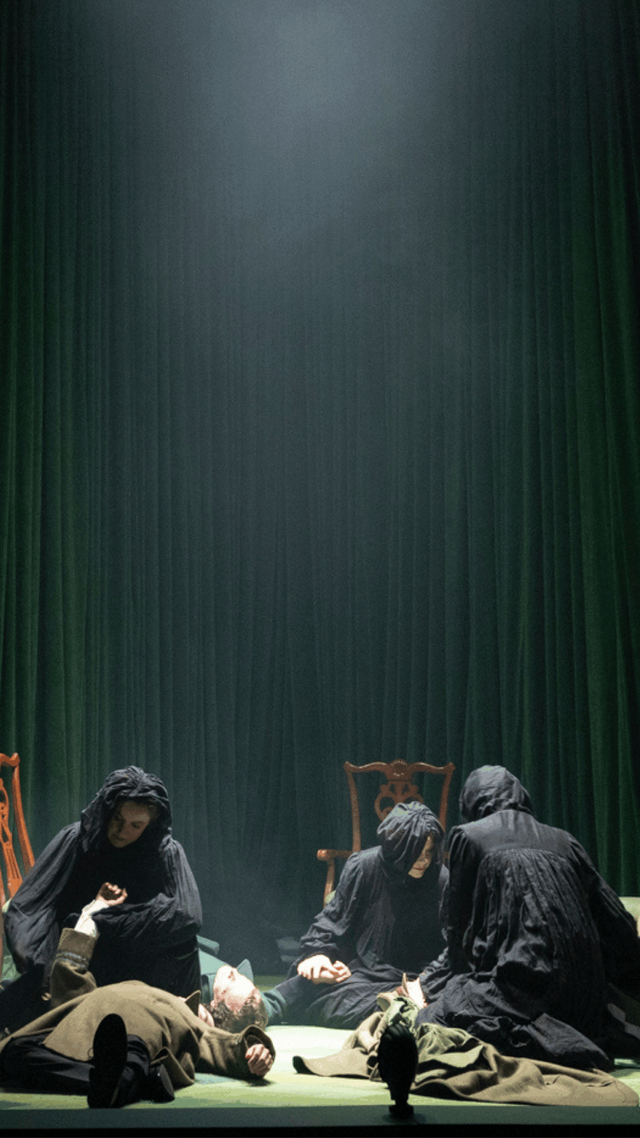
Which is what the witches do all the time!
Exactly. The witches’ prophesies are full of equivocation. They say one thing but mean another. So Macbeth can be seen as a cautionary tale about dabbling in this. Plus, James was Scottish. So it’s also a play about the dangers of killing a Scottish King. Subtext: Don’t do it!
So Shakespeare was sucking up to the boss?
Well yes. But no judgement here. Back then, playwriting was a risky business. If monarchs thought your work was treasonous, they could have you tortured or put to death. Plus, James literally sponsored Shakespeare’s acting company.
So there were plenty of reasons why Shakespeare delivered what his audience (i.e. James!) wanted. Shakespeare would also have known that the King was obsessed with witchcraft, ghosts, and necromancy (predicting the future by communicating with the dead). James even wrote his own books about it, the Daemonologie trilogy.
Sounds like a horror movie franchise.
Oh, it’s way scarier than that. Imagine the leader of a world superpower believing a bunch of wild conspiracy theories.
Hmmm, that would never happen today. What did King James actually believe in?
Demonic possession, black magic, evil spirits, the list goes on. He was convinced that witches had conjured up a violent storm to try and kill him at sea. And he enthusiastically endorsed witch hunting and witch trials.
It’s fair to say that, by the time Shakespeare’s audiences walked into the theatre to see Macbeth, they were already petrified of witches.